
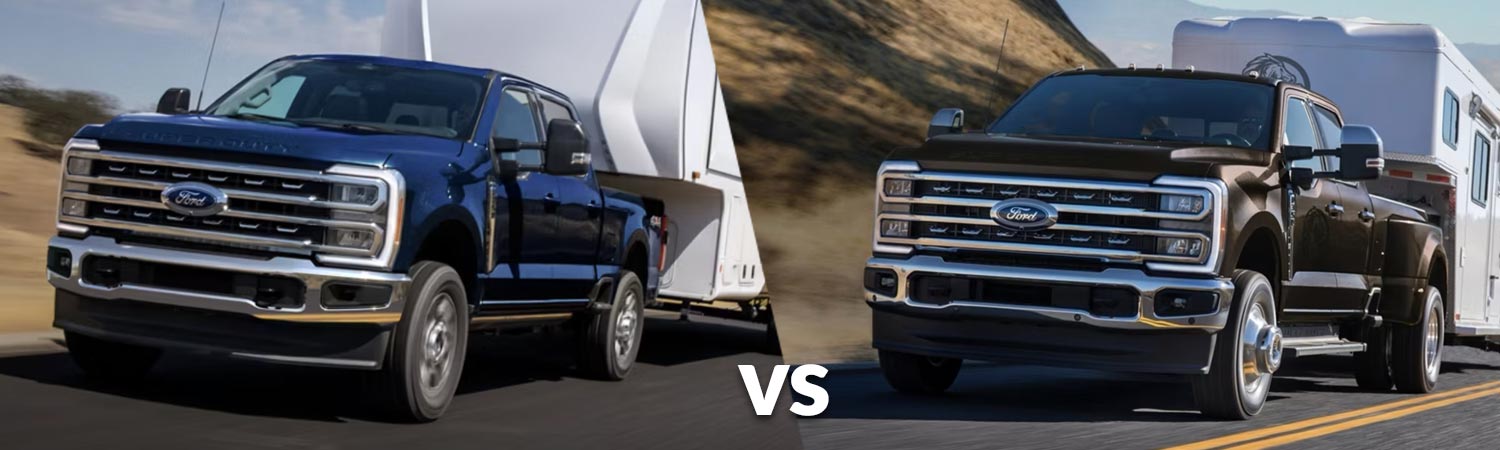
The team here at Tim's Truck Capital is always answering questions about truck configurations and which trucks are best for New Hampshire drivers. If you are asking yourself whether a dually or single rear wheel truck is the right pick for your lifestyle and needs, our experts are here to help. There are benefits to both, though for our customers in and around Concord, NH, one might be a better fit. Read on to learn more about dually and single-rear-wheel models, and let's get you in for a test drive.
Dual vs. Single Rear Wheel Trucks: At a Glance
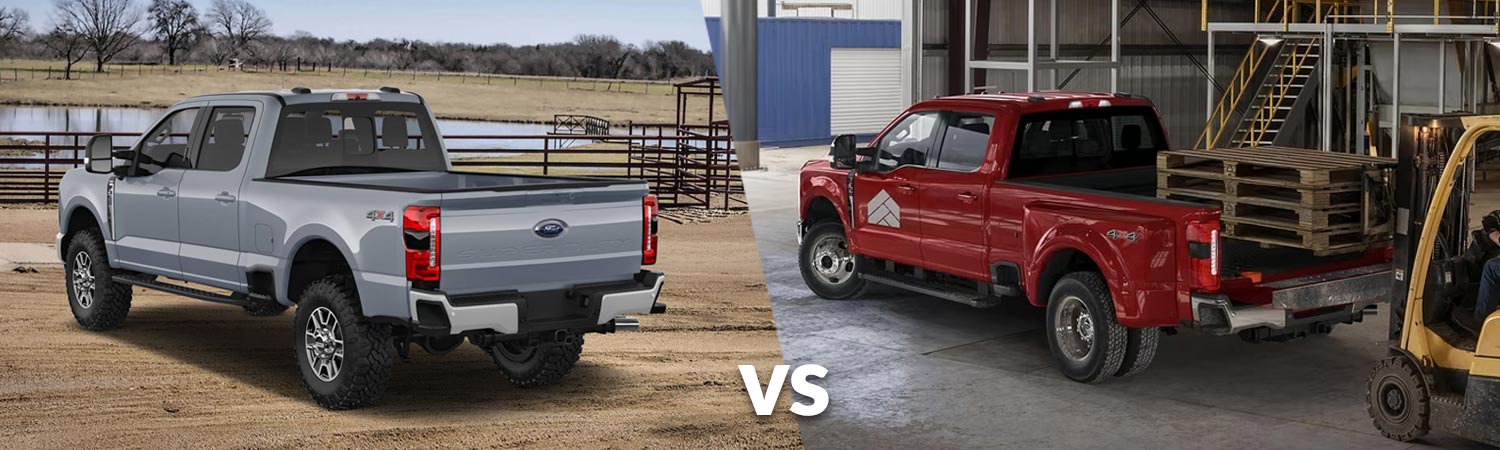
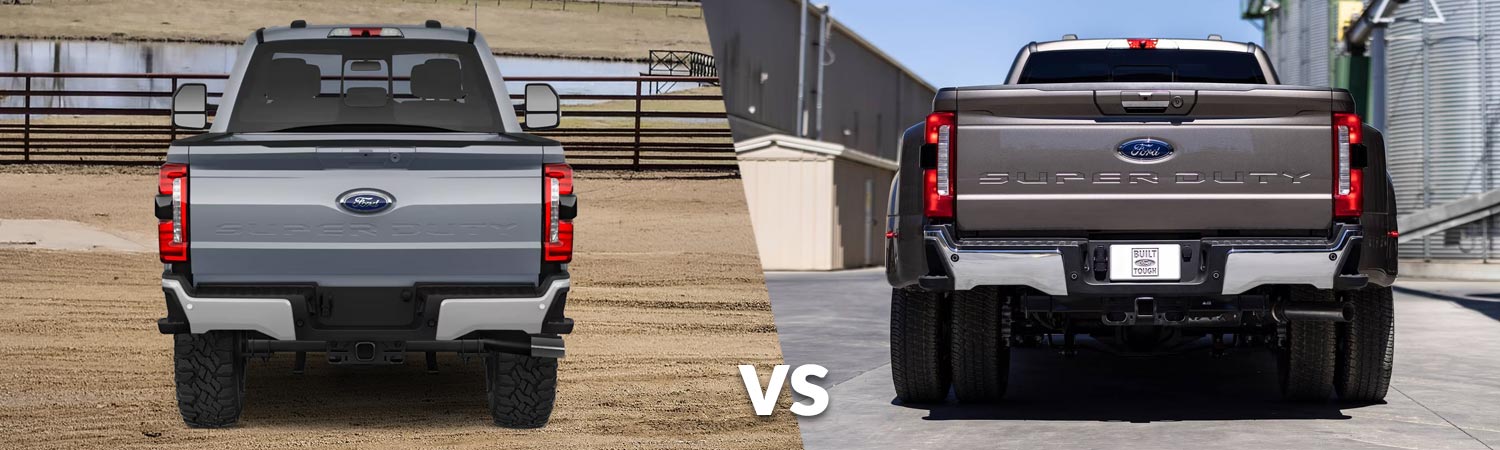
The main difference between dual- and single-rear-wheel configurations on a truck is how they are physically set up for driving. With dual rear wheels, you get two wheels connected to each rear axle. That totals four total back tires, plus the two at the front of the truck. With a single-rear-wheel truck, you have one tire and one wheel on each axle, totaling four wheels on your vehicle. That is more common.
Most pickups do not need an additional set of rear wheels, especially for everyday driving and towing here in New Hampshire, so that is something to think about before making any final decisions. Depending on your day-to-day tasks, hauling, and towing, a dual-rear-wheel configuration might make more sense, and our local team near Concord is always happy to go over this in person.
Single Rear Wheel Trucks: Pros
For single-rear-wheel trucks (the most common), you have a pretty classic configuration for your vehicle. With this comes easier driving and mobility throughout the four seasons, plus in a New Hampshire winter, you can count on its narrower footprint to make snow and ice less intimidating. Again, this comes down to the truck and the conditions on the road ahead, but a single-rear-wheel truck is the default for a reason: it's easy to drive and control.
Single Rear Wheel Trucks: Cons
If you want to tow over 15,000 pounds consistently and are concerned about long-term stability and durability, a single rear-wheel option is probably not for you. Sway can also be a problem if you do not have additional rear wheels when towing and hauling heavy loads, especially in windy conditions or over long distances.
Dually Rear Wheel Trucks: Pros
Having an extra pair of back wheels can make a huge impact on your hauling and towing. One of the biggest pros of a dually rear-wheel truck is its wider, more stable base. This can help prevent swaying when towing, and a dual-rear-wheel setup provides greater stability with heavier loads. Most truck owners will agree that any truck needing to tow over 15,000 pounds can benefit from an extra set of wheels in the rear, while anything under 15,000 pounds fits best with a single rear wheel pickup.
Dually Rear Wheel Trucks: Cons
A dual-rear-wheel truck can be too much to handle and maneuver for everyday commuting, making it unnecessary for most truck owners. Also, adding rear wheels makes your truck heavier, which negatively impacts fuel economy, so expect to spend more on gas or diesel if you have a dual-rear-wheel setup.
Which is Better for Everyday Driving: Dual or Single Rear Wheel Trucks?
If you need a truck that is best for daily driving, single-rear-wheel trucks are usually the easiest to drive. Because you are likely used to a single rear-wheel design, having your truck with four rear wheels can make it overly heavy for everyday city and highway commuting. Even on a worksite or while towing, you only need a dual-rear-wheel setup if you plan to tow large loads and need the increased stability or have long-distance towing more often than not.
Our sales team at Tim's Truck Capital walks drivers through the benefits of both single- and dual-rear-wheel models daily, so we are more than happy to do the same for you.
How Does a Single Rear Wheel Truck Handle Snow?
Because we are in New Hampshire, your truck has to handle and navigate snow and ice. Normally, trucks have only two rear wheels, one attached to each axle, making driving through snow straightforward. A single rear-wheel truck can handle snow just fine, and you would be more concerned about it being 2WD rather than 4WD if traction were the main problem.
However, someone traveling to the White Mountains who needs to tow a heavy load and is concerned about sway and stability could be a customer who prefers a dually rear-wheel truck. Winter is also not the only season you'll be experiencing in your vehicle, so you need to find something that's comfortable to drive 365 days a year. Most times, a single rear-wheel model fits into someone’s day-to-day commute.
How Does a Dually Rear Wheel Truck Handle Snow?
If you are driving in snow and have a dual-rear-wheel truck, it can be more challenging, depending on conditions. Many drivers argue that unless you are consistently towing 15,000+ pounds in winter weather, a dual-rear-wheel setup is unnecessary. Again, this is not true when comparing a 2WD single-rear-wheel truck to a 4WD dually, because in that case, the dual-rear-wheel truck with four-wheel drive would outperform the 2WD model. Tim’s Truck Capital is here to discuss these things with you in and around Concord, NH, so please don’t wait to come in.
Which is Better for Long-Distance Towing: Single or Dual Rear Wheel Trucks?
If you are looking for long-distance towing and hauling, a dual-rear-wheel truck is your best bet for large loads. With that added weight, you may experience more trouble with traction in snow, but it makes a huge difference when towing heavy items and equipment. New Hampshire drivers might need a heavier truck to prevent swaying, and with four wheels in the back, you get increased weight capacity for extended hauling.
Which Truck Tows Better: A Single Rear Wheel or A Dually Rear Wheel?
When considering towing potential for your next truck, a dual-rear-wheel model is likely to be the winner. That is because with the added support on the back axles, you have more ability to haul heavy loads from point A to B, and depending on weather conditions, do it in a safer, steadier way. Towing capacity for a DRW vehicle can range from 30,000 to 37,000+ pounds, so the extra wheels make towing that weight possible.
Here are some reasons towing looks better when driving a dual rear wheel truck:
- Massive Payload: Two extra tires allow for much higher tongue weight.
- Zero Sway: The wider footprint acts like an anchor against wind and passing semis.
- Better Braking: Four contact patches on the road provide superior stopping power.
- Safety Buffer: If one rear tire blows out, you still have another to maintain control.
- Stability: Drastically reduces the "wobble" felt when hauling tall fifth-wheels.
Single Rear Wheel Truck Examples
Our team near Concord, NH, wants to go over some examples of both single- and dual-rear-wheel trucks you might want to explore on-site, and give you a head start on your shopping journey. Single rear wheel trucks are the most common, so these include:
- Ford F-150 (All models)
- Ford F-250 Super Duty
- Ford F-350 Super Duty (Available in both SRW and DRW)
- Chevrolet Silverado 1500
- Chevrolet Silverado 2500HD
- Chevrolet Silverado 3500HD (Standard is SRW; DRW is an option)
- GMC Sierra 1500
- GMC Sierra 2500HD
- GMC Sierra 3500HD (Standard is SRW; DRW is an option)
- Ram 1500
- Ram 2500
- Ram 3500 (Available in both SRW and DRW)
- Toyota Tundra
- Nissan Titan
You can see that most of your favorite trucks are listed here, with some offering dual rear wheels as an option if you need extra weight for towing. Again, trucks typically have four wheels as standard, with an option for additional rear wheels on heavier-duty models.
Dually Rear Wheel Truck Examples
Below, we will share some of the dual-rear-wheel trucks you might shop for with us here at Tim's Truck Capital. Remember, some trucks come with both single- and dual-rear-wheel configurations, so you might see some of the same makes/models as above.
- Ford F-350 Super Duty (DRW package)
- Ford F-450 Super Duty (Only available as a dually)
- Ram 3500 Heavy Duty (DRW option)
- Chevrolet Silverado 3500HD (DRW option)
- GMC Sierra 3500HD (DRW option)
- Ford F-550 (Commercial chassis cab)
- Ram 4500 / 5500 (Commercial chassis cab)
Due to their size, some of these trucks require a dual-rear-wheel setup, while others may offer it as an optional upgrade instead of the standard single-rear-wheel capability. Most commercial trucks will have DRW as an option or default, so if you shop that size, expect six wheels.
Shop Your Next Used Truck at Tim's Truck Capital
The team at Tim's Truck Capital has spent decades in the auto business, and we're here to sell you your next used truck. Whether you need a dual-rear-wheel truck for towing or a single-rear-wheel model for handling snow and icy roads, we are the right dealership to choose. Not everyone wants just four wheels, and depending on the expected workload, you might need the additional two for your truck. Let's figure this out on-site near Concord, NH, as soon as today!